
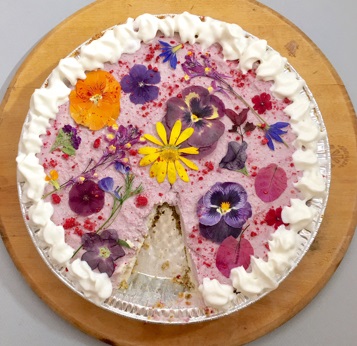
Flowers are edible …yes they are edible and many people (aside from chefs and herbalists) still don’t know this. I’m not sure why this isn’t a more well known fact or why consumable flowers aren’t a product more commonly sold in stores, my only guess is that it may be a sustainability issue. But in my opinion flowers are one of the most under-used parts of herbs and plants. And it needs to change because there are many plants with edible flowers that can be used in a variety of culinary ways, and not only are flowers beautiful in food preparation but they have many health benefits. I can only hope with culinary shows and blogs rising in popularity …the word is slowly getting out to the public about the benefits of using flowers in cooking. In fact I’ve seen them in organic food markets and farmer’s markets more frequently in the past year. I even recently came across edible flowers in the produce section at Trader Joe’s in Washington state.

Rose Petal Panna Cotta

Frozen Floral Berry Pie
That being said, for those who are unsure as to which flowers can be consumed…here is a list of edible flowers frequently used in teas, salads and as edible garnishes. Along with each flower I’ve listed one health benefit from eating or drinking them. Most flowers have wonderful health benefits, just like any normal vegetable or fruit would.
Angelica – helps women menstruate, it’s also good for nerve pain
Anise – a great appetite stimulant
Bee Balm – helps lower a fever
Begonia – can reduce candida in the body, also good for menstrual disorders
Borage – used in a popular English remedy “cool tankard” w/ wine & lemonade
Calendula – great for the skin, especially rashes and inflammation
Carnation – has been used to help endometriosis
Chamomile– is a nervine used to calm and relax the body
Chickory – helps with high blood pressure or rapid heart-beat
Chrysanthemum – used to fight infection, strep throat
Clover (red) – is good for general detoxification
Cornflower – inflammation, bleeding gums
Daisy – dermatitis
Dandelion – sap from the stem supposedly works to get rid of warts
Elder-flower – good for burns and rashes
Fruit blossom – depends on fruit
Geraniums – anti-bacterial and anti-fungal, great immune booster
Hibiscus – high levels of Vitamin C
Hollyhock – helps with respiratory issues
Honeysuckle – helps with inflammation and the common cold/flu
Lavender – relaxes nerves, sedative, aphrodisiac for men
Lilac – helps with gas and intestinal issues
Marshmallow – good for stomach ulcers
Meadowsweet – heartburn
Nasturtiums – kidney issues
Peonies – helps with female hormonal issues
Rose – tea infusion helps sore throats as well as the liver
Squash blossoms – high in Vitamin A
Sunflowers – lung infection or bronchitis
Tulips – excellent poultice for insect bites/stings
Sweet violet – good for swollen lymph nodes and use on the lymphatic system
I’m sure I’ve missed some flowers, if you notice any I didn’t mention, …
feel free to comment them below.

 Ritual Roses